Buying South Asian clothing online can feel like a guessing game, especially when you are shopping preloved and cannot try anything on first. A label marked “Medium” might fit beautifully one time and not at all the next. The good news is that the right fit is far more about measurements than labels, and once you know what to check, you can shop with real confidence.
Preloved Bazaar is a UK marketplace for preloved South Asian and Middle Eastern fashion, for women and men, with no seller fees, buyer protection on every order, and listings you can create in minutes. Here is how to use a lehenga size chart in the UK and fit a salwar kameez, saree and more.
Why South Asian sizing is tricky
There is no single sizing standard across the South Asian fashion world, so a garment from one designer or region can run larger or smaller than another at the “same” size. Many pieces are also sold as fabric to be tailored rather than ready-to-wear, so a tag can reflect the cut of cloth rather than a body it will fit. The reliable approach is to ignore the label and compare the garment’s actual measurements with your own.
The measurements that matter (your lehenga size chart)
For most South Asian and Middle Eastern outfits, a handful of measurements tell you almost everything you need to know:
- Bust — essential for the kameez, choli (blouse) and abaya yoke.
- Waist — key for lehenga skirts, sharara and salwar waistbands, often drawstring or fixed.
- Hips — for fitted kameez, gowns and trousers, so they skim rather than strain.
- Shoulder — the seam-to-seam width across the back, which sets how the top sits.
- Length — kameez or abaya hem, plus skirt and trouser length.
- Sleeve and inseam — shoulder to wrist, and the inside-leg seam on salwar or churidar.
How to measure yourself
Using a soft tape measure, stand naturally and keep the tape snug but never tight.
- Bust: around the fullest part of your chest, tape level all the way round.
- Waist: around the narrowest part of your natural waist.
- Hips: around the fullest part, with your feet together.
- Shoulder: across the back, from the tip of one shoulder to the other.
- Length and sleeve: easiest taken from a garment you already own, laid flat, then compared with a seller’s listing.
Note your figures in both centimetres and inches, as South Asian sellers may quote either.
Stitched, semi-stitched or unstitched?
You will often see these terms, and they make a real difference to fit:
- Stitched (ready-made): finished and ready to wear at the stated size. Buy on measurements, as there is limited room to change it.
- Semi-stitched: partly constructed, with seams or hems left open so a tailor can adjust the fit to you — a forgiving choice.
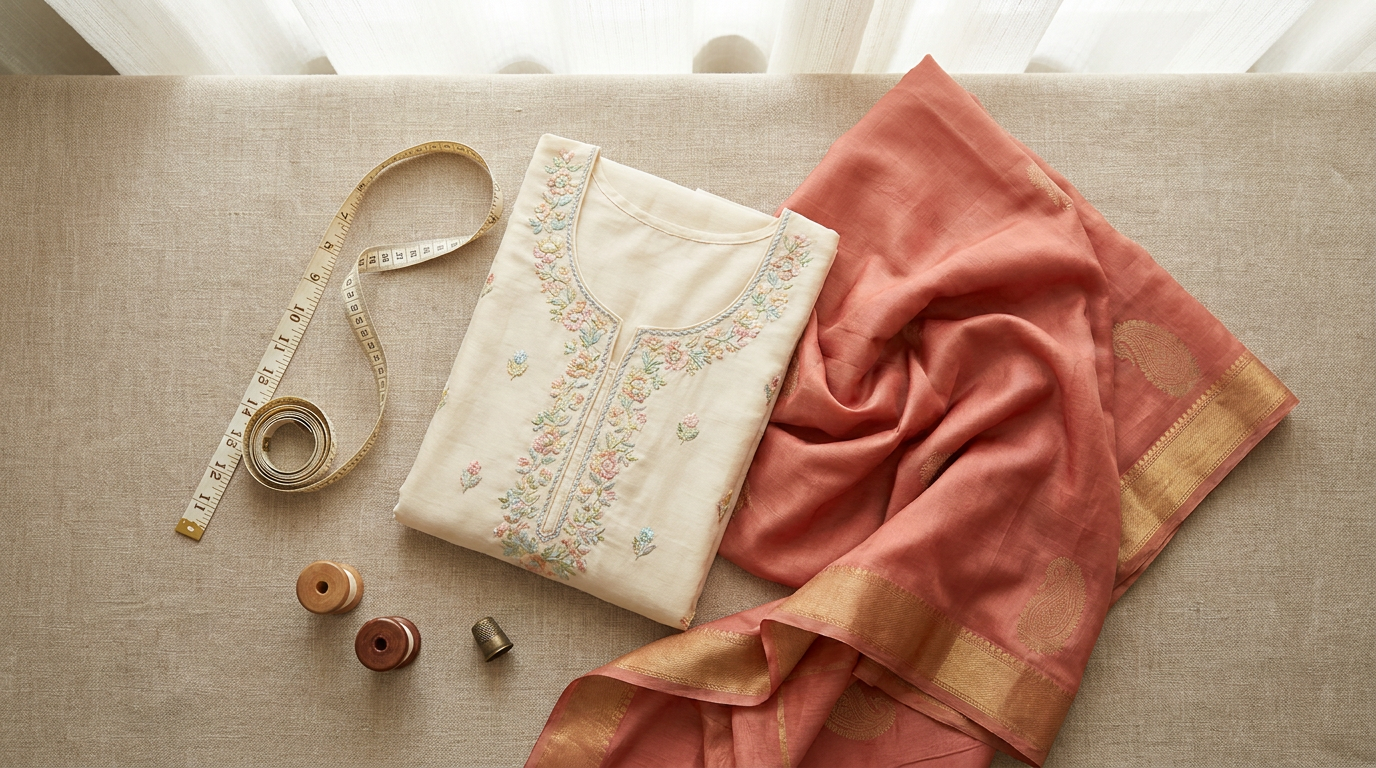
- Unstitched: lengths of fabric (often dupatta, top and bottom) tailored from scratch, so fabric quantity matters more than any size.
- Free size: designed to fit a broad range, usually via a drawstring, elastic or generous cut. Still check the flat measurements, as the range varies a lot.
Buying preloved: check measurements, not labels
When you buy preloved, the original tag may be missing, faded or from a brand whose sizing you do not know — and none of that matters if you have the garment’s real measurements. Our preloved clothing condition guide explains how sellers grade wear so there are no surprises. Ask for the flat measurements (laid out and measured edge to edge) for bust, waist, length and sleeve, then compare them with your own, adding a little ease for comfort. Our women’s collection ranges from everyday salwar kameez to bridal lehengas, at a fraction of their original price, and our guide to buying a preloved bridal lehenga covers what to check before you commit.
A quick word on alterations
One of the joys of South Asian tailoring is how easily many pieces can be adjusted. A skilled local tailor can take in a kameez, hem a lehenga or move a choli’s hooks for a modest cost, so a piece that is slightly loose but otherwise perfect can often be made to fit. It is far easier to take a garment in than to let it out, so when in between sizes, lean towards the larger option.
When in doubt, ask the seller
Asking for measurements is completely normal, so never feel awkward about it. Every Preloved Bazaar listing has built-in messaging, so you can message the seller directly for exact measurements, stretch or alteration details, or to check how an item has been worn — the simplest way to avoid a return.
Ready to refresh your wardrobe sustainably? Explore the full marketplace and browse preloved listings, and if you have beautiful pieces gathering dust, you can become a seller and list them in minutes, with no seller fees.