A good thobe is one of those garments you reach for again and again — clean, dignified and quietly elegant. For many men across the UK, the thobe and the wider world of Middle Eastern menswear sit at the heart of how they dress for the moments that matter. Yet many of these pieces spend most of their life folded away, worn only a handful of times — which is exactly why buying and selling preloved thobes makes good sense.
The thobe and its variations
The thobe — also spelt thawb — is the long, ankle-length robe worn by men across much of the Arab world. It is the cornerstone of the wardrobe: modest, comfortable and smart all at once. While the silhouette is broadly similar from place to place, the names and small details change as you travel.
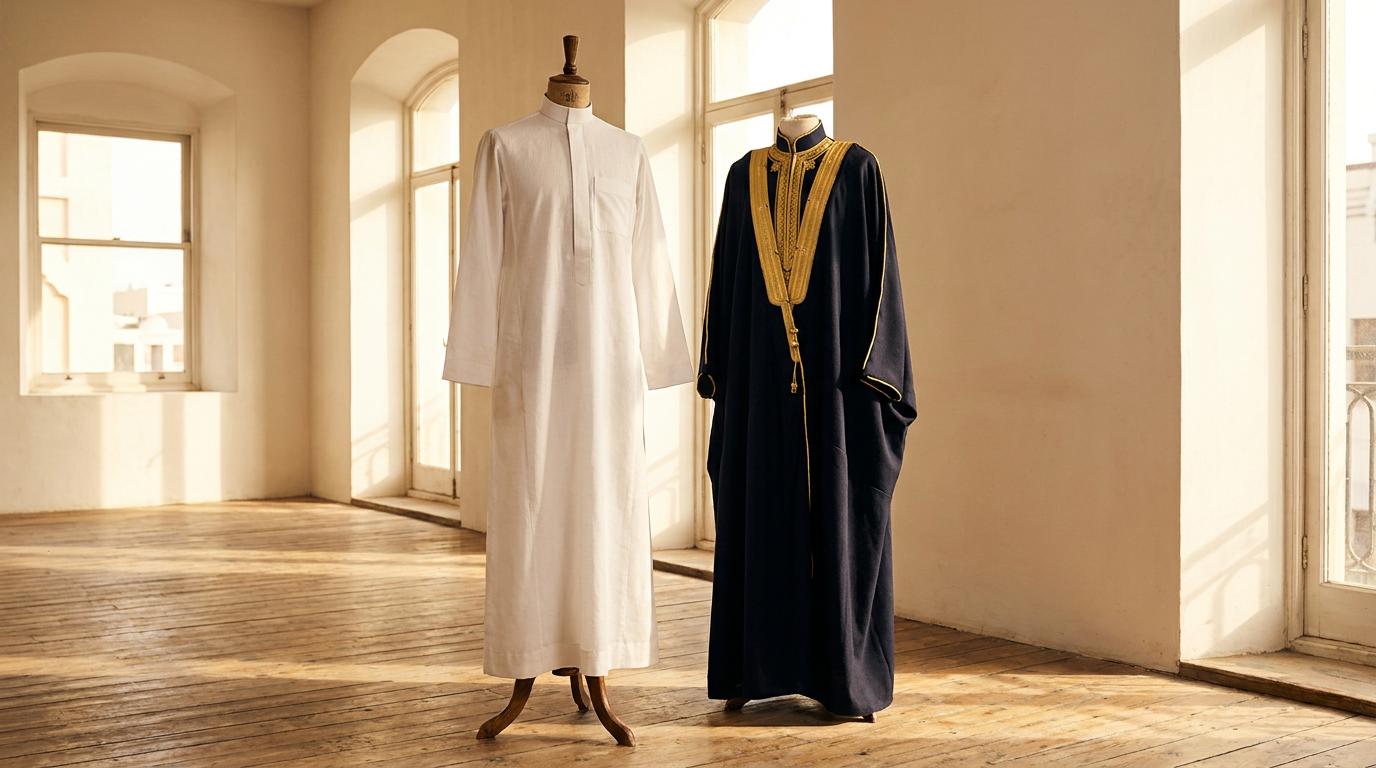
In the Gulf you will often hear it called a kandura in the United Arab Emirates, and a dishdasha in countries such as Kuwait and Qatar. Styles differ in the collar, the cuffs and the front fastening — some are plain and collarless, others have a neat stand collar or a small embroidered placket. Saudi-style thobes are typically crisp and white with a fold-down collar, while Emirati kanduras frequently feature a long tassel at the neck.
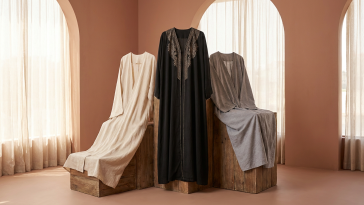
For the most formal occasions, a man may wear a bisht over his thobe — a flowing cloak, usually in black, brown, beige or cream, often finished with gold or silver trim along the edges. The bisht signals ceremony and status, and you will see it at weddings, on grooms and at important gatherings.
Fabrics and seasonal weights
Thobes come in a range of weights to suit the season. Lighter cotton and cotton-blend fabrics keep things cool and breathable, which matters as much in a warm British summer as it does in the Gulf. Heavier weaves and brushed or wool-blend cloths offer more warmth — a genuinely useful option through a UK winter. Whites and soft neutrals dominate for daywear, while deeper tones tend to come out for formal evenings and celebrations.
When it is worn
Middle Eastern menswear is woven into the rhythm of the week and the year. You will see the thobe worn for Friday prayers, when many men choose something clean and presentable for the mosque. It comes into its own at Eid, where a fresh thobe is part of the celebration, and it is a natural choice for weddings and formal events, where a bisht over a pristine thobe makes a real statement. Men from South Asian backgrounds may reach for a kurta in similar settings, but the thobe and its regional cousins remain the defining pieces here.
Why buy preloved thobes in the UK
These are exactly the kind of garments that suit buying preloved. Because thobes and bishts are often worn for occasions rather than daily wear, many come up for sale in excellent condition — sometimes barely used. A well-made piece holds its shape and finish, so you can find real quality at a fraction of the original price, while keeping good clothing in use rather than landfill.
On Preloved Bazaar, every purchase is covered by buyer protection, so your money is held securely until the seller has posted your item with tracking and a short protection window has passed, and you are covered if it does not arrive or is not as described. You can browse across men’s fashion and our dedicated Middle Eastern category, or explore the whole marketplace at your own pace.
What to check second-hand
A little care when buying preloved goes a long way:
- Measurements over labels. Sizing varies between makers and regions, so check the listed shoulder-to-hem length, chest and sleeve against a thobe you already own.
- Fabric and finish. Look at the photos for the weave and any sheen, and read the description for the material and weight.
- Condition. Check the collar, cuffs and front placket — the areas that show wear first — and on a bisht, inspect the trim for loose threads.
- Ask the seller. If anything is unclear, message them — a good seller is happy to confirm measurements or send an extra photo.
Selling your thobes
If your wardrobe holds thobes, kanduras or a bisht you no longer wear, someone else would love to give them a new life. Selling on Preloved Bazaar is straightforward, and there are no seller fees — your asking price and postage are paid out to you, minus only the standard payment-processing fee. You can list an item in minutes: take a few clear photos in good light, add honest measurements and a short, accurate description, and set your price.
Be upfront about the size, the fabric and any signs of wear — it builds trust and leads to smoother sales. Whether you are clearing space after an occasion or passing on a piece that no longer fits, you are helping these garments stay in use and within reach of someone who will treasure them. Have a look through what is on offer, or list your own preloved pieces today.